Licensing in the U.S. Toy Industry: A Snapshot
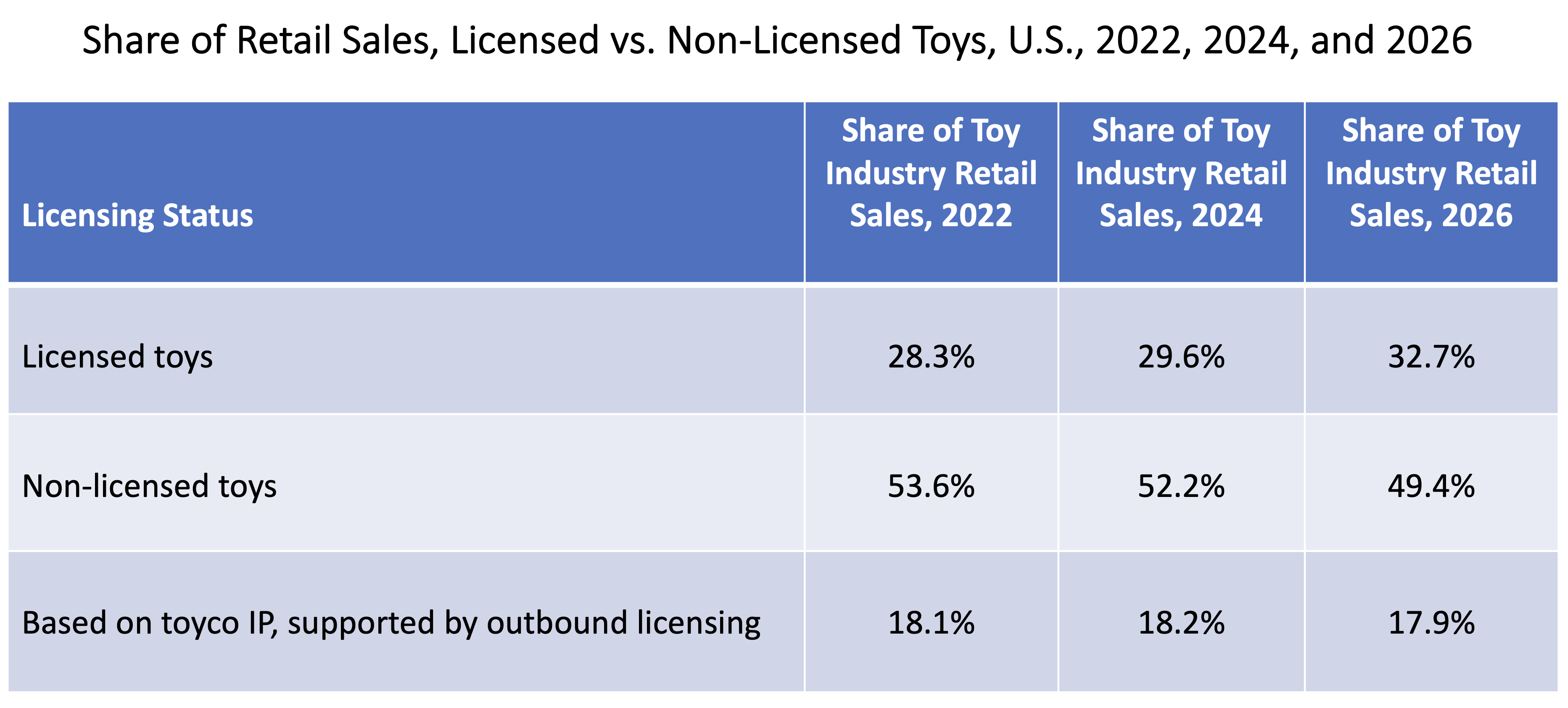
For the first time in many years, the share of toy industry sales attributable to products that are supported by a licensing program but not licensed themselves—in other words, the toy maker is both the owner of the intellectual property and the marketer of the toys based on that IP — decreased slightly over the past two years. This segment was down 0.3 percentage points from 18.2% in 2024 to 17.9% in 2026, according to new research from Raugust Communications.
Source: Raugust Communications.
Sales of traditional licensed toys, meanwhile —those based on IPs not owned by the toy manufacturer — increased significantly from 29.6% to 32.7%, a 3.1 percentage-point gain, over the past two years. Consumers are embracing licensing in the toy market at present, with Circana noting that licensed properties, led by Pokémon, were a key factor in the toy industry’s growth overall in 2025.
The increase in licensing in the industry was attributable to a number of factors. New players that had previously eschewed licensing continue to enter the licensing space; there is more toy company-to-toy company licensing activity (even between rivals Hasbro and Mattel), as toy brands want to have a presence in each other’s proprietary toy lines; some toy companies are commercializing their secondary brands by offloading them to smaller licensees; and the continued strength of collectible toy lines requires continuous new content, often licensed, to keep consumers coming back. Meanwhile, fans of licensed properties are looking for merchandise that deepens their engagement with and enjoyment of their fandom.
All told, toys based on a licensed IP, whether manufactured by the IP owner or a partner licensee, accounted for 50.6% of sales, according to this research, up from 47.8% in 2024. Licensing’s share of slightly over half the market is very high; in many years this combined percentage is closer to 45%. Conversely, non-licensed, traditional toys continued to decline, decreasing from 52.2% to 49.4% over the two-year period.
The data for each year shown in the table measures status of licensing in the industry as of February in each of the three years. The shares represent the percentage of total toy industry retail sales in the U.S. market.